The plan to use a shiny new tool lost to the site I already had. Here's what building it taught me, and what 723 books said about me.
I've logged every book I've finished since late 2020. That's 723 books. For six years they've lived in a Notion database that exactly one person ever looked at: me.
When I started rebuilding this site, I wanted them out in the open. A grid of everything I've read this year, covers and all. A searchable archive of everything before that. And, yes, a way to buy the ones worth buying.
The first idea on the table was to build a brand-new site for it in Lovable, one of the AI app builders, and then write about the experience. The idea came from the daily digest I’ve asked Claude to deliver to me with highlights from my 100+ Substack subscriptions. It was a good idea, but it's also exactly the kind of idea I'd talk a client out of.
The shiny tool vs. the site I already pay for
I've spent 25 years in agencies watching brands chase the new platform while the thing they already own sits there, underused. A second site means a second login, a second thing to maintain, and readers split between two places. That's not a strategy. That dilutes the brand.
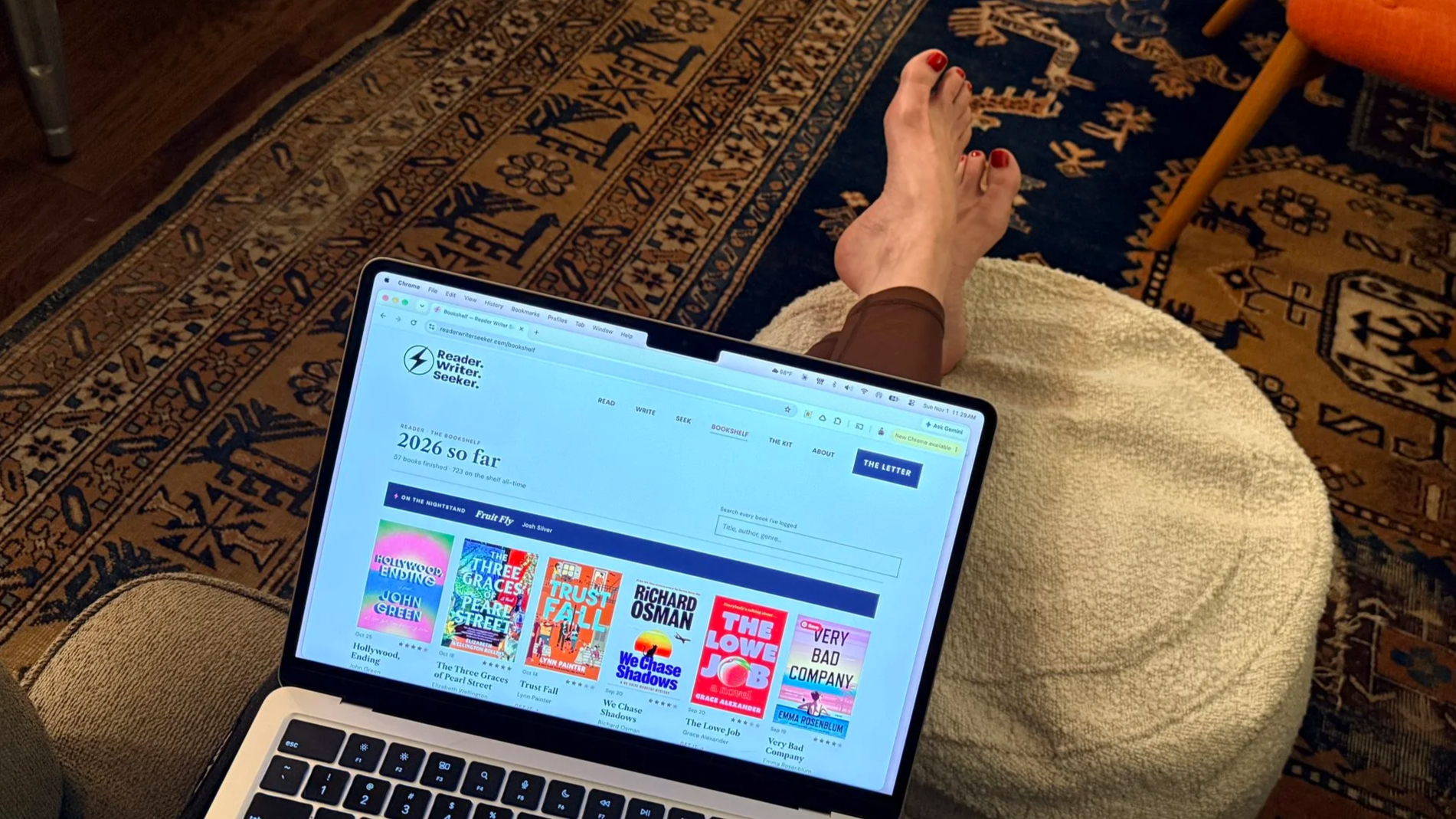
So I built it where my readers already are: right here, on Squarespace, inside a single code block. I worked through it with Claude in one Sunday morning, before I started my Sunday laundry, workout, or even finished my coffee.
Here's what the Bookshelf does now:
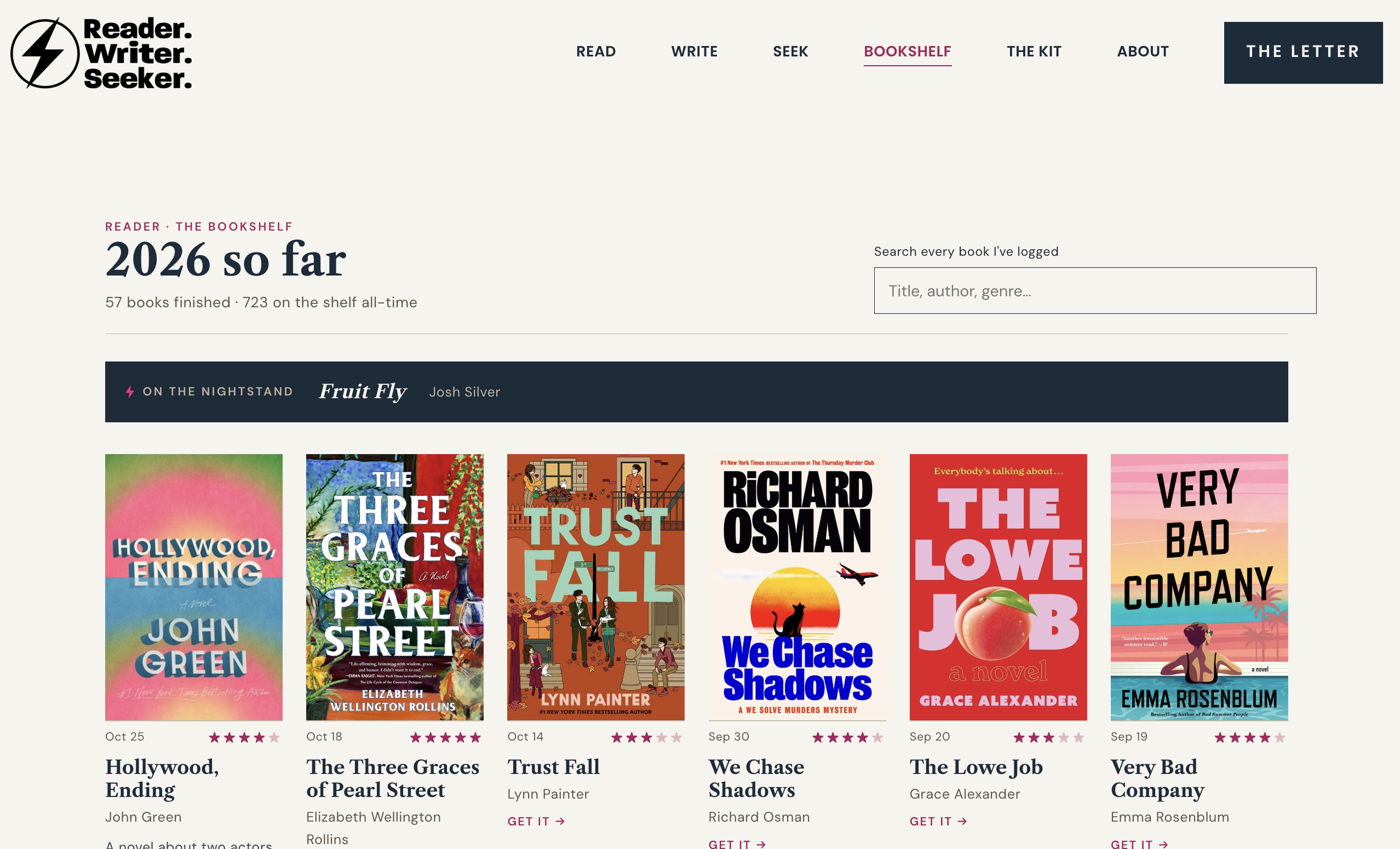
This year up top. Every book I've finished in 2026, newest first, as a grid of covers with my rating.
Everything else below. A table of every earlier book you can sort by title, author, date, rating, or genre, and filter by year.
One search box for all of it. Type an author, a title, or a genre.
Covers fill in by themselves. I don't upload a single image. The page looks them up.
What I'm reading right now sits in a bar at the top.
And updating it? I add one row to a spreadsheet. That's it.
What I learned
1. The data was more interesting than the database.
I expected to learn something about code. I learned something about me. Of 723 books, 95% are fiction. More than half are tagged romance. In six years I've read 38 nonfiction books, which is roughly what a lot of strategists claim to read every January.
I could have tidied that up. Hidden the romance, led with the business books. Instead, I'm leaning in. Romance readers know how a story ends before page one, and they keep reading anyway. Most brands would kill for that kind of attention. More on that soon.
2. The hard parts weren't technical. They were decisions.
The code took minutes. The judgment calls took the rest of the morning.
Which books get shop links? All books in the current year, but only my 4- and 5-star reads in the archive. A buy button on a 2-star book reads like I'm selling something I didn't like. If I recommend it, I liked it. That's the deal.
Do I go back and write a recap for all 723? No. I'd never finish, it would burn me out, I’d never launch, and an unfinished project is worse than no project. Recaps start now.
What happens in January? On January 2nd, a grid of this year's books is a grid of one. So the page borrows the last few from the year before until the new year catches up. Small thing. It's the difference between a page that looks alive and one that looks abandoned.
3. The bugs were tiny and extremely human.
The first time I loaded the page, it proudly announced I'd read zero books. I'd copied the web-page version of my Google Sheet link instead of the data version. Same sheet, different ending to the URL.
Then I tried searching "emily henry" and the space bar didn't work. Every keystroke redrew the page and quietly deleted the space I'd just typed.
Each fix was one line. But I only found them by clicking everything like a suspicious customer. AI makes fixing cheap. It doesn't make testing optional.
4. The real work is getting your data where it needs to be.
Squarespace can't safely talk to Notion directly, so my reading log now lives in a Google Sheet the site can read. Six years of notes moved over in one import. The lesson I keep relearning with clients: before you pick the shiny new tool/platform/whatever, figure out where the data lives, who needs to read it, and how it gets updated.
The through line: The best tool is usually the one you already pay for. The work isn't building. It's deciding what the thing should do and what it shouldn't.
Go poke around
The Bookshelf is live. Search your favorite author. If they write romance, statistically, I've read them. If you find a 5-star I loved and you didn't, I want to hear about it.
And if you want the short version every month (books worth your time, tools worth your money, one idea I can't stop turning over), the Letter is where that lives.
Some links on the Bookshelf are affiliate links. If you buy through them, I may earn a small commission at no cost to you.